Intel Unveils Texture Set Neural Compression: AI-Powered Texture Optimization for Next-Gen Graphics
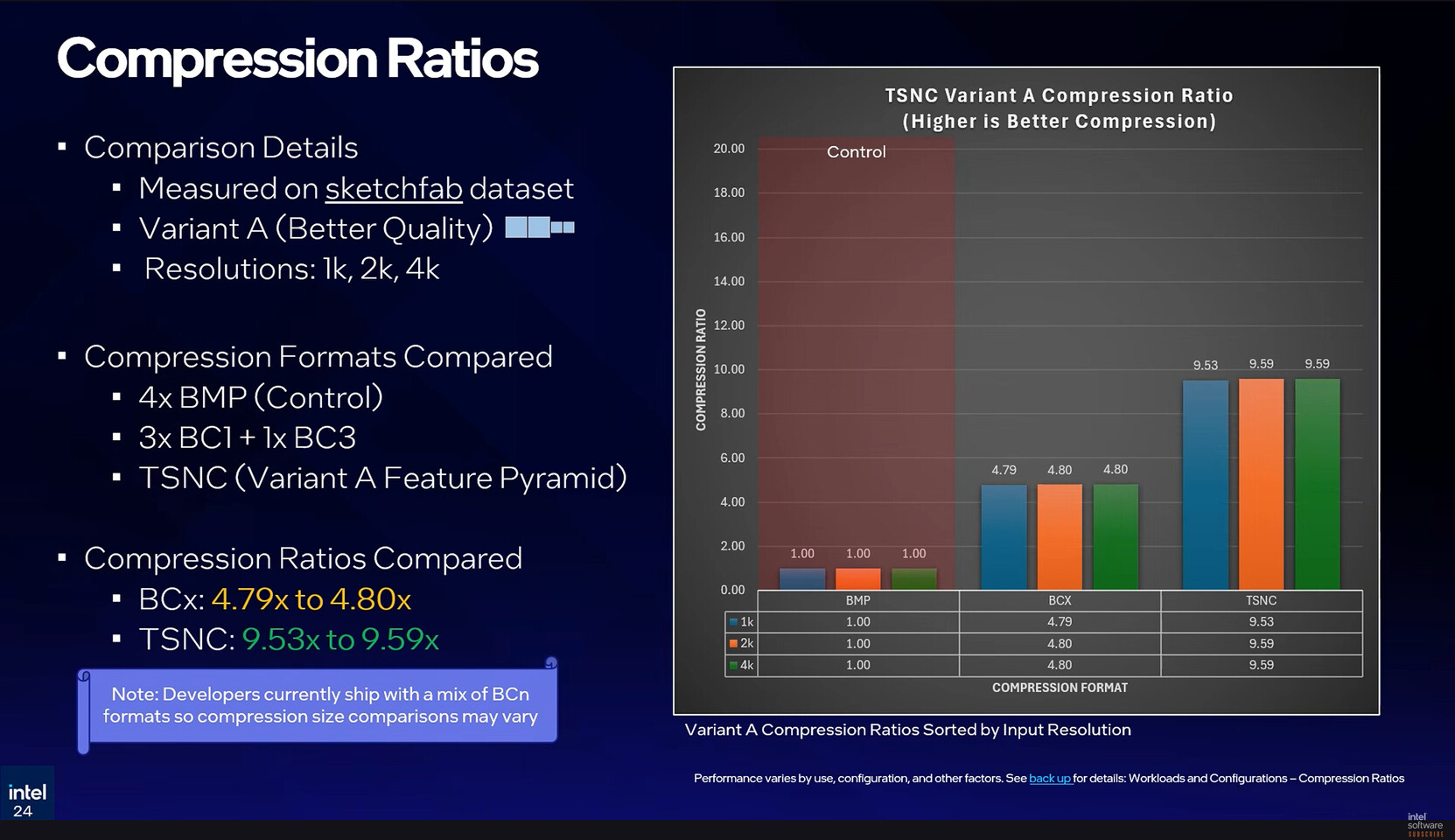
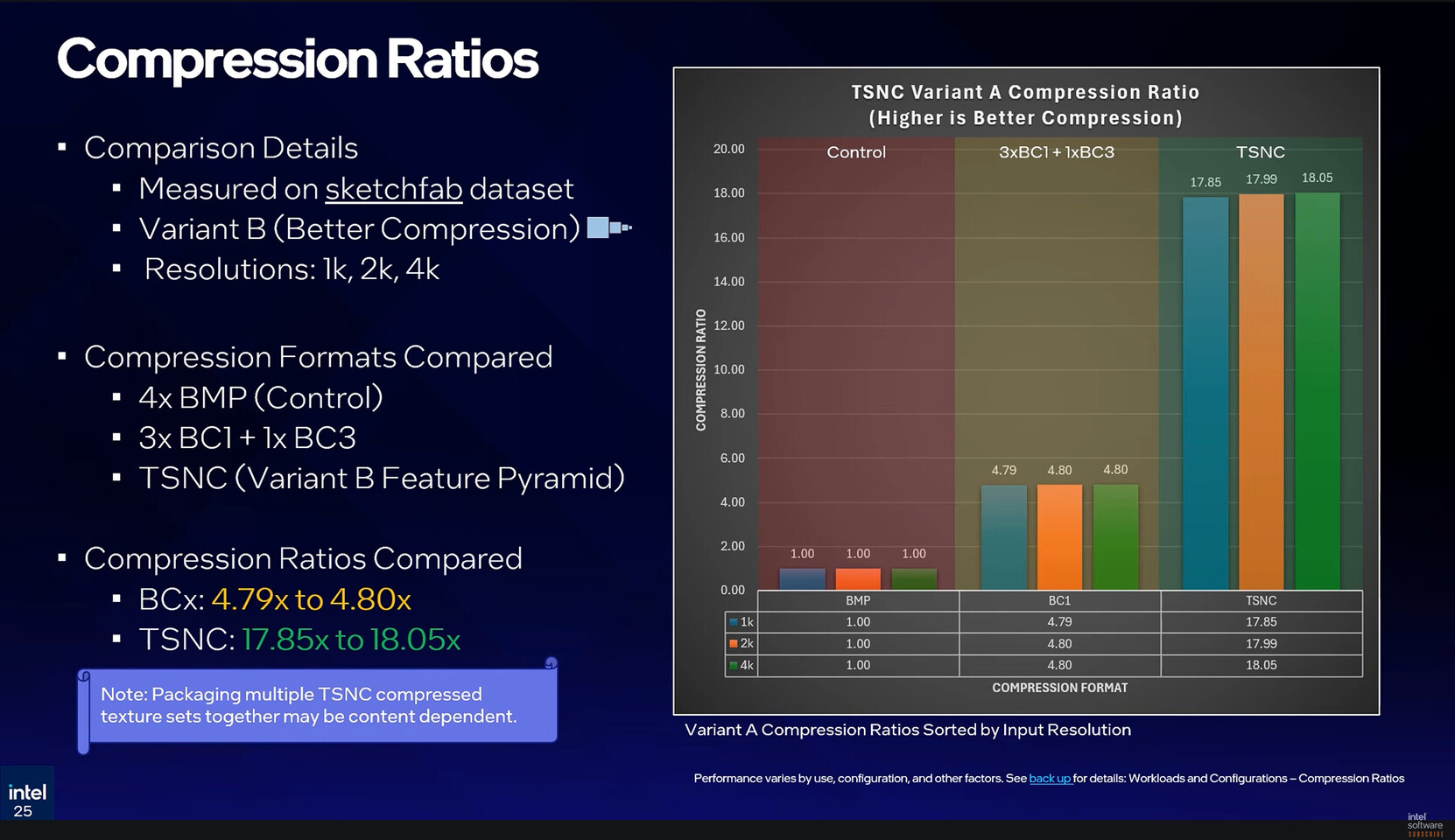
Intel has introduced its groundbreaking Texture Set Neural Compression (TSNC) technology, setting a new standard for texture compression in gaming and graphics applications. Leveraging advanced AI-based neural networks, TSNC delivers textures up to 18 times smaller than those compressed with traditional industry-standard methods, all while maintaining impressive visual fidelity.
How TSNC Works: AI-Driven Texture Compression
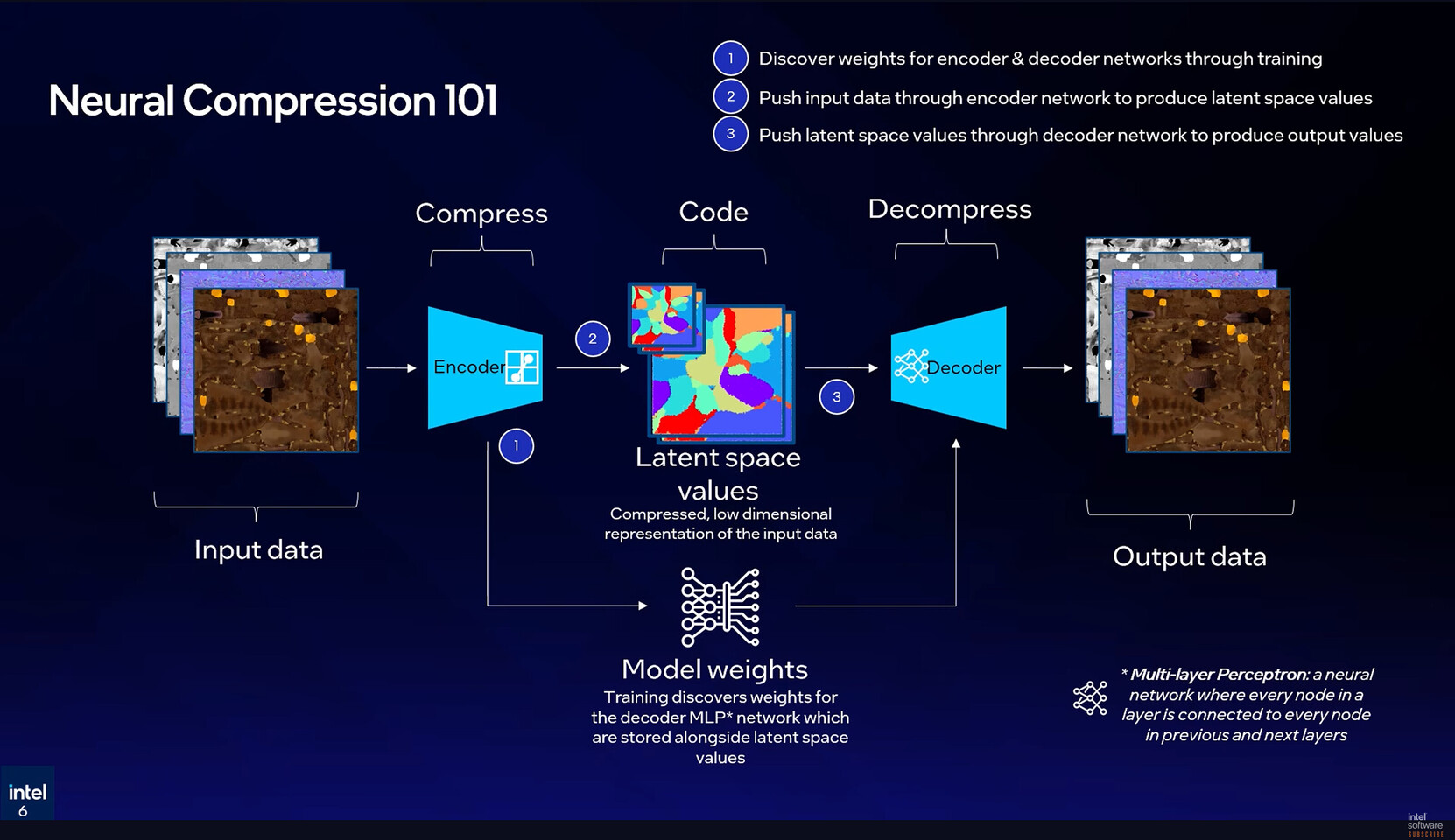
TSNC operates by processing input data from widely used BCn texture formats. Intel’s graphics team employs a neural network encoder to compress these textures into a highly efficient latent space. When needed, a network decoder reconstructs the textures for use in real time. This AI-driven approach enables the creation of output textures that are significantly smaller, with only minimal quality loss at the highest compression settings.
The neural network behind TSNC is trained on millions of standardized textures, allowing it to accurately replicate the appearance of BCn-compressed textures while dramatically reducing file size. This innovation translates to faster texture loading, reduced VRAM consumption, and enhanced performance on modern GPUs.
Flexible Compression Options for Developers
Intel’s TSNC technology offers multiple compression variants to suit different needs:
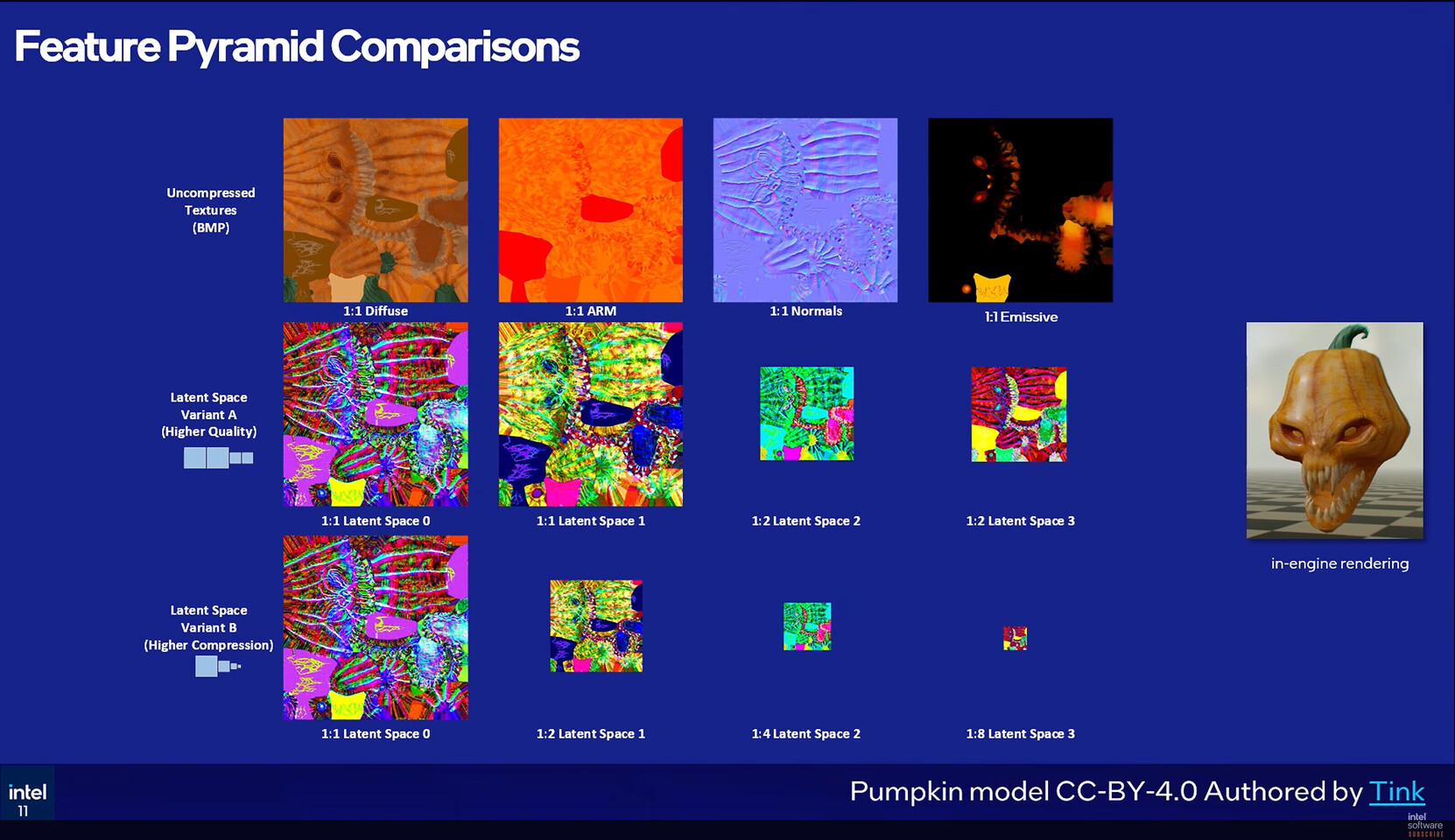
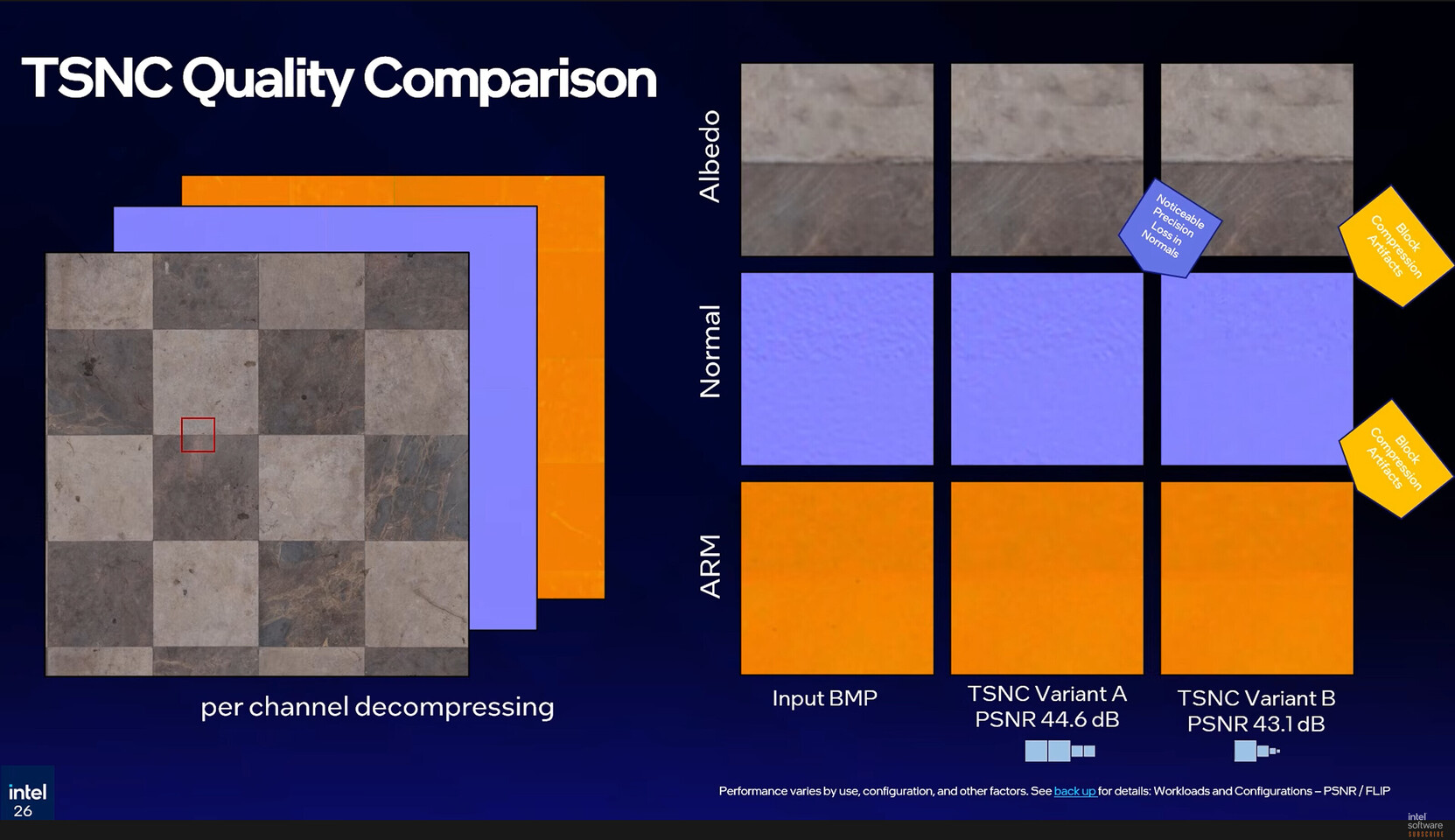
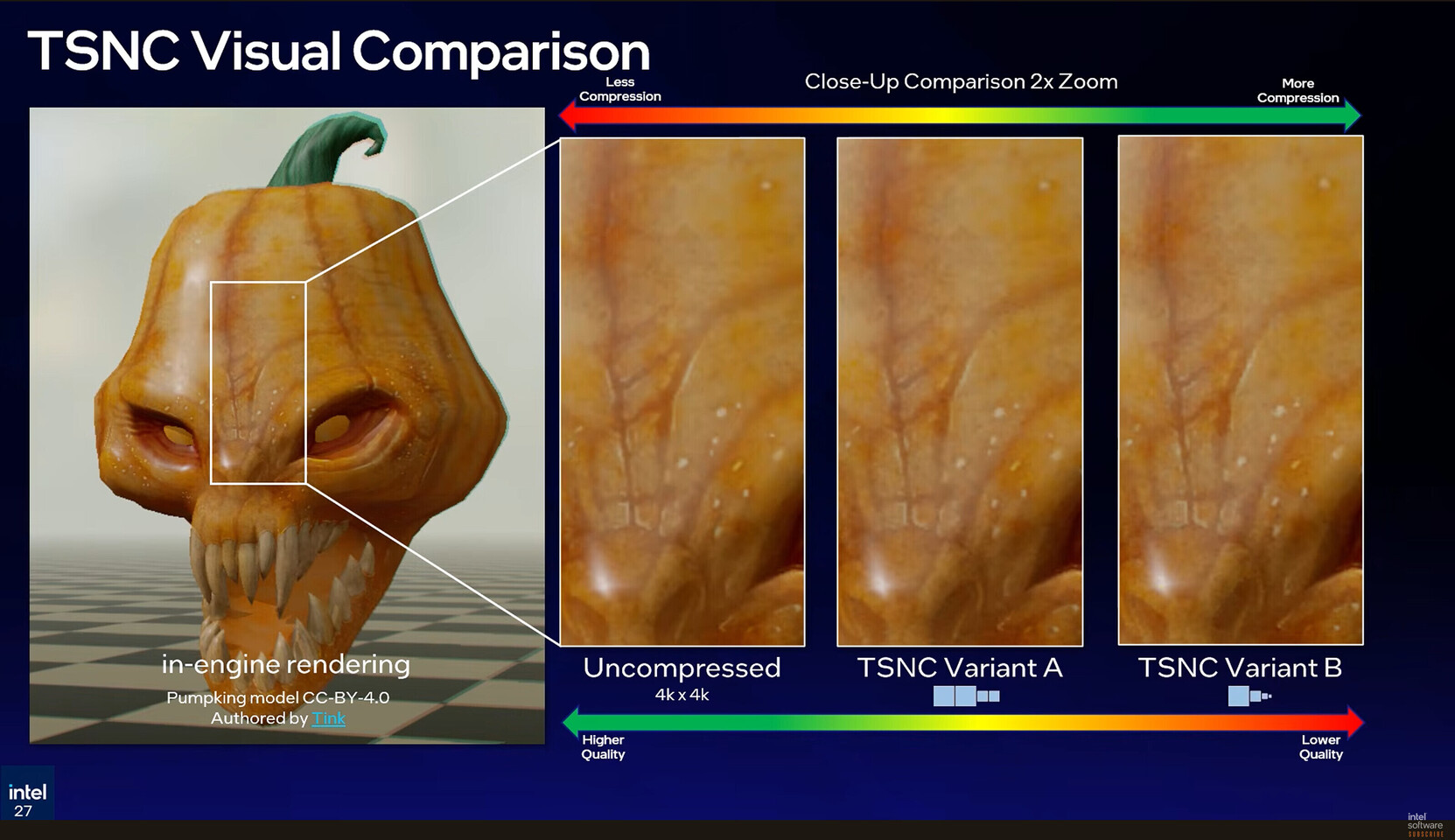
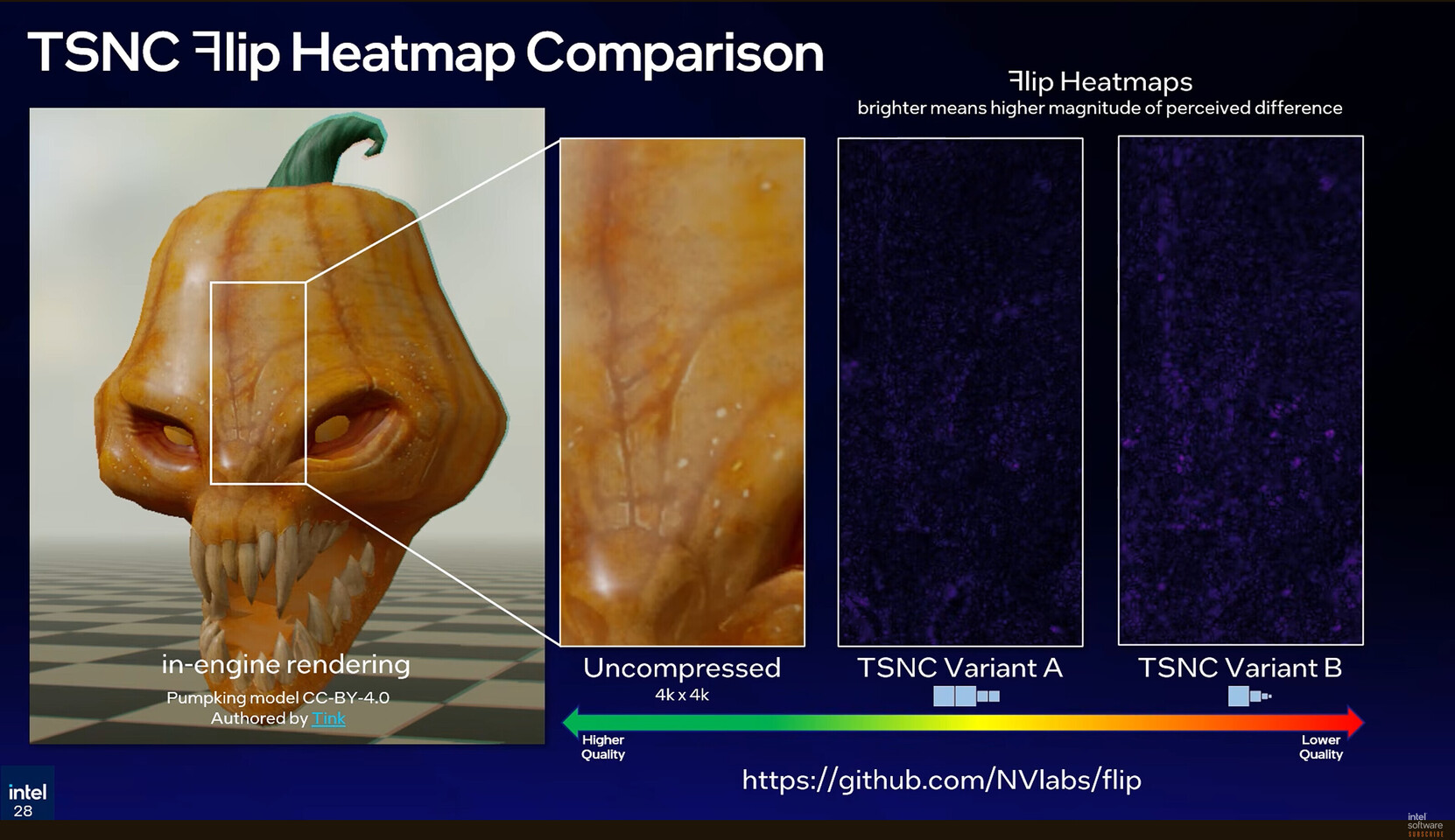
- Variant A: Achieves up to 9x compression with virtually no perceptible loss in visual quality. According to Intel’s analysis using NVIDIA’s FLIP tool, this variant results in only a 5% drop in visual quality, making it ideal for scenarios where image fidelity is paramount.
- Variant B: Pushes compression up to 18x, delivering substantial reductions in texture size and VRAM usage. This comes with a slightly higher, but still modest, 7% quality drop—noticeable in some cases but offering significant performance and storage benefits.
These options allow developers to prioritize either visual quality or maximum efficiency, depending on the requirements of their games or applications.
Performance Benchmarks and Hardware Integration
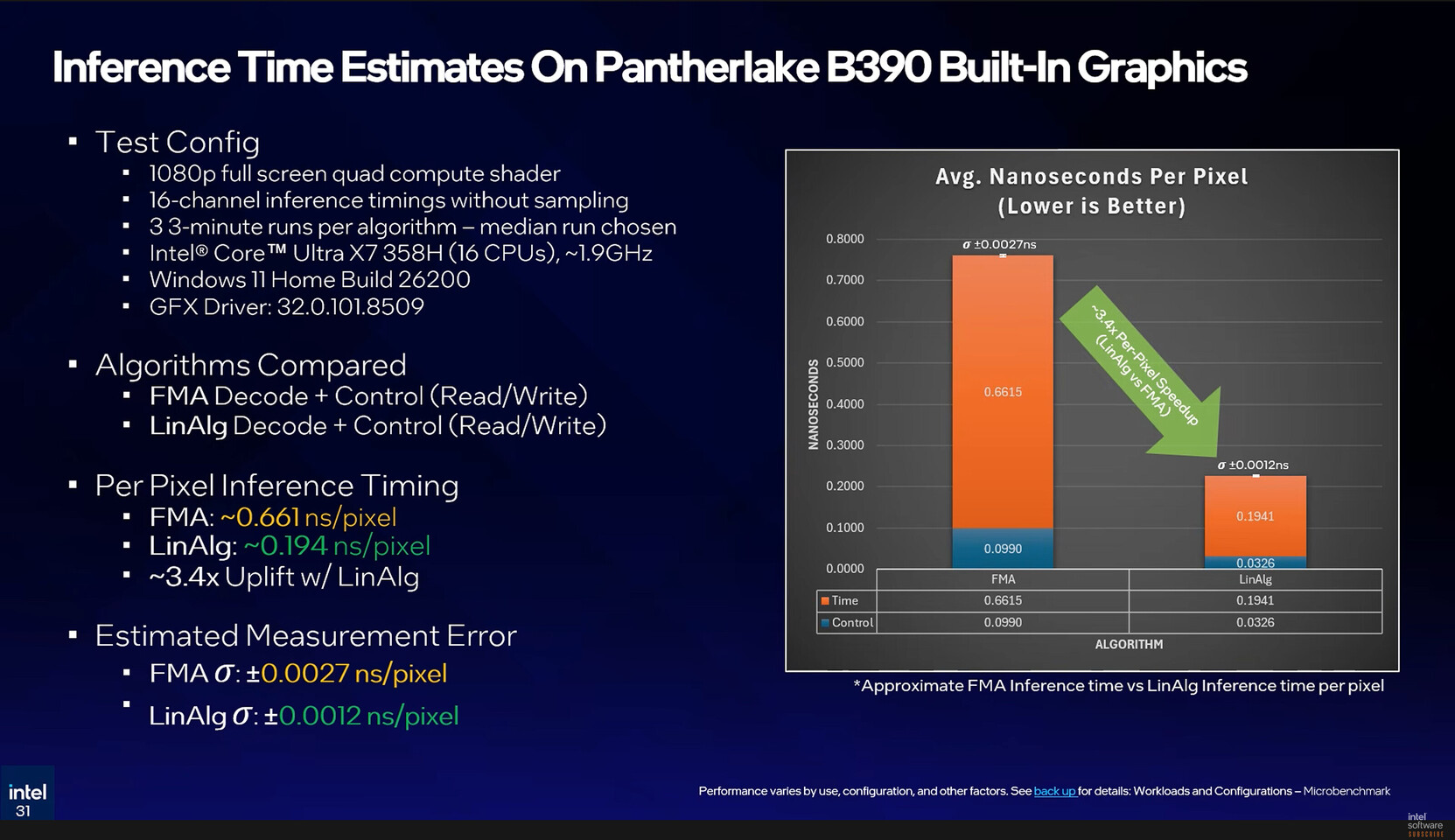
Intel has benchmarked TSNC on its latest "Panther Lake" platform, featuring Arc B390 integrated graphics with XMX cores designed to accelerate AI workloads. The results are impressive: the AI model can generate the first texture pixel in just 0.194 nanoseconds, ensuring seamless real-time rendering without perceptible latency or visual artifacts.
Looking Ahead: Availability and Future Releases
Intel plans to release TSNC technology as an alpha version later this year, with beta and stable releases to follow. While specific timelines have not been announced, the introduction of TSNC marks a significant step forward in AI-powered graphics optimization, promising faster load times, reduced storage requirements, and improved performance for next-generation gaming experiences.