In-Depth Look at the Microsoft Surface Laptop Ultra with NVIDIA RTX Spark SoC
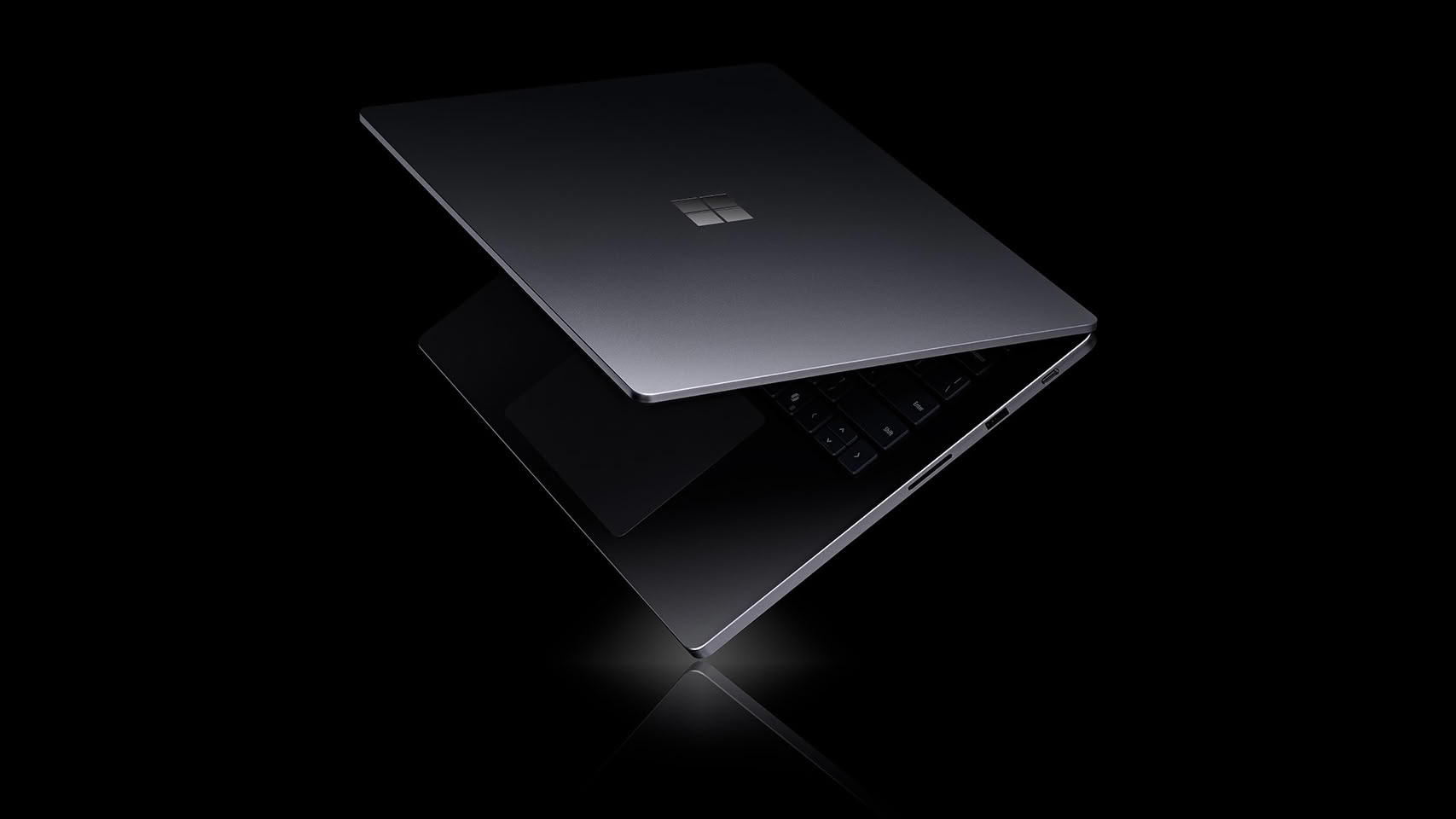
A recent hands-on review of the upcoming Microsoft Surface Laptop Ultra has surfaced on the TechPowerUp forums, offering a rare early glimpse into this highly anticipated Windows-on-Arm device. The review, posted by long-time forum member Fouquin, provides detailed insights into the laptop’s performance, thermals, and build quality, all powered by the new NVIDIA RTX Spark Arm-based SoC.
Discovery and Initial Impressions
In an unusual twist, the Surface Laptop Ultra unit was reportedly found abandoned and picked up by the reviewer. Despite its unconventional origins, the device was thoroughly tested, providing valuable information ahead of its official release.
Hardware Specifications and Driver Updates
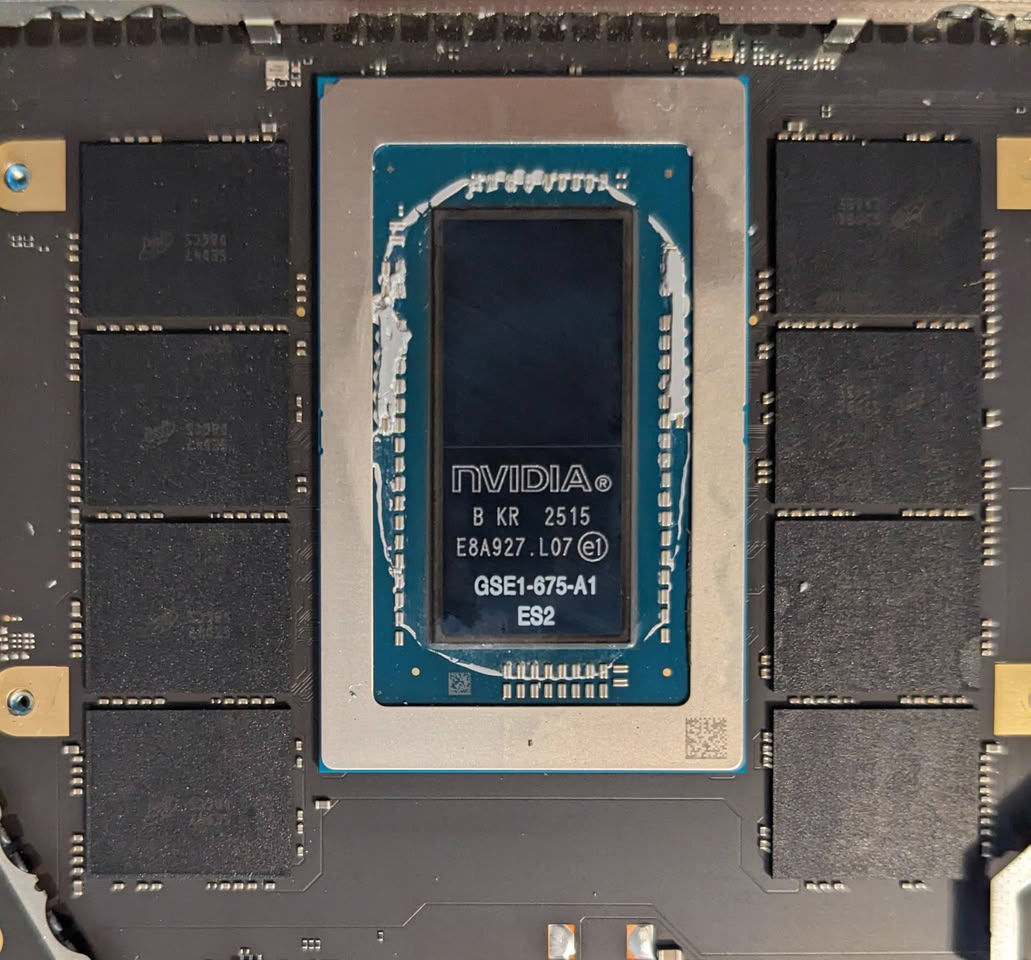
The tested Surface Laptop Ultra features the top-tier variant of the Spark SoC, boasting 6,144 GPU cores and a 20-core CPU. Initially, the laptop ran on outdated graphics drivers, but Fouquin successfully updated to the NVIDIA preview driver version 616.00. This update enabled CUDA support for the integrated Blackwell GPU, unlocking additional performance and compatibility for benchmarking.
Performance Benchmarks and Power Efficiency
Using the Phoronix Test Suite, the Surface Laptop Ultra underwent a series of benchmarks. While the device’s performance does not yet match Apple’s latest M5 Pro MacBooks or some x86-based laptops, it demonstrates promising results for a first-generation Windows-on-Arm platform.
Power consumption was closely monitored across different profiles:
- In Balanced mode, idle power draw was 7-8 W, increasing to 12 W after the driver update.
- Performance mode idled at 23 W with the new drivers.
- “Best Power Efficiency” mode adopted the 7-8 W baseline after updates.
Benchmark Results
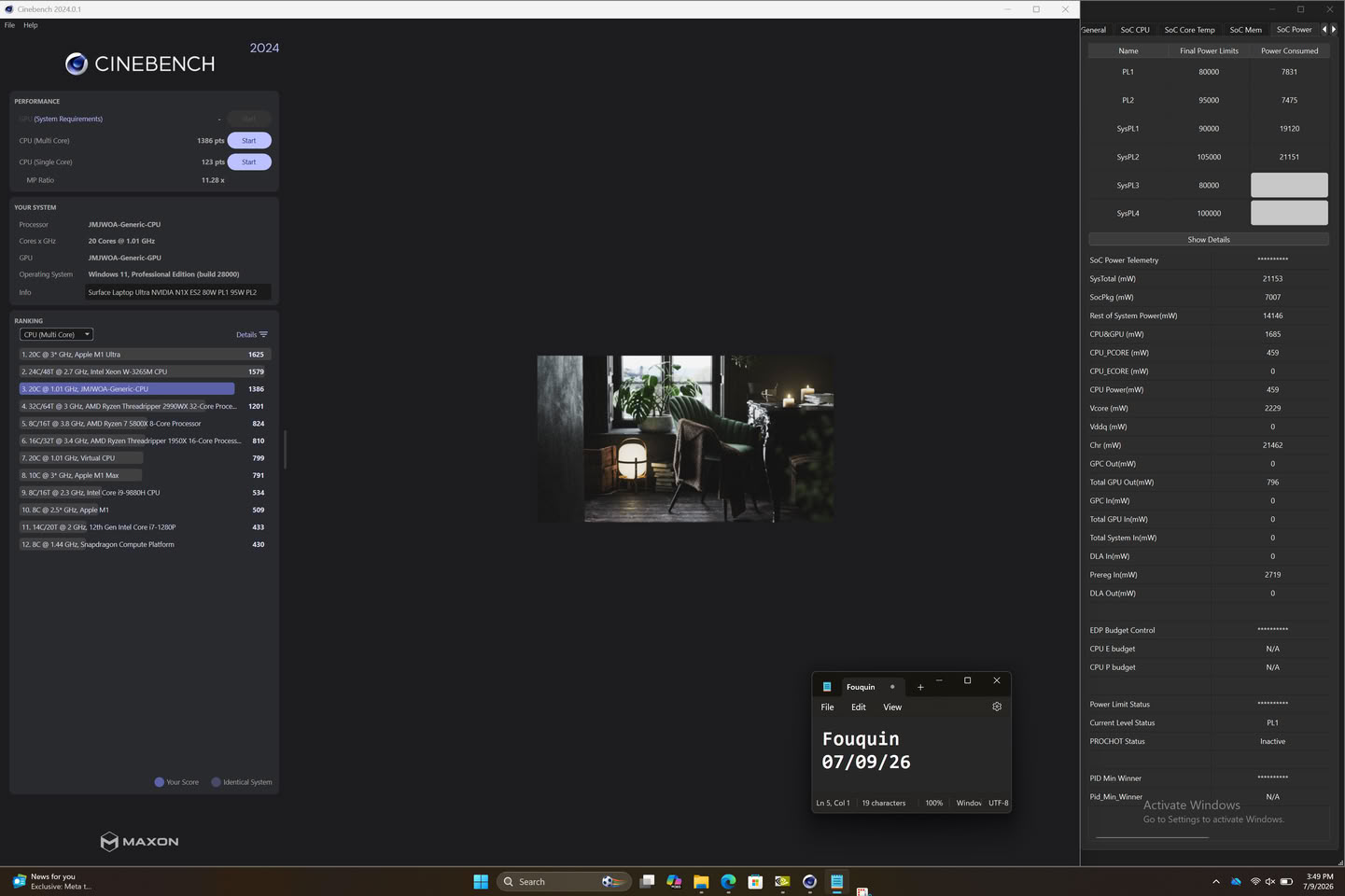
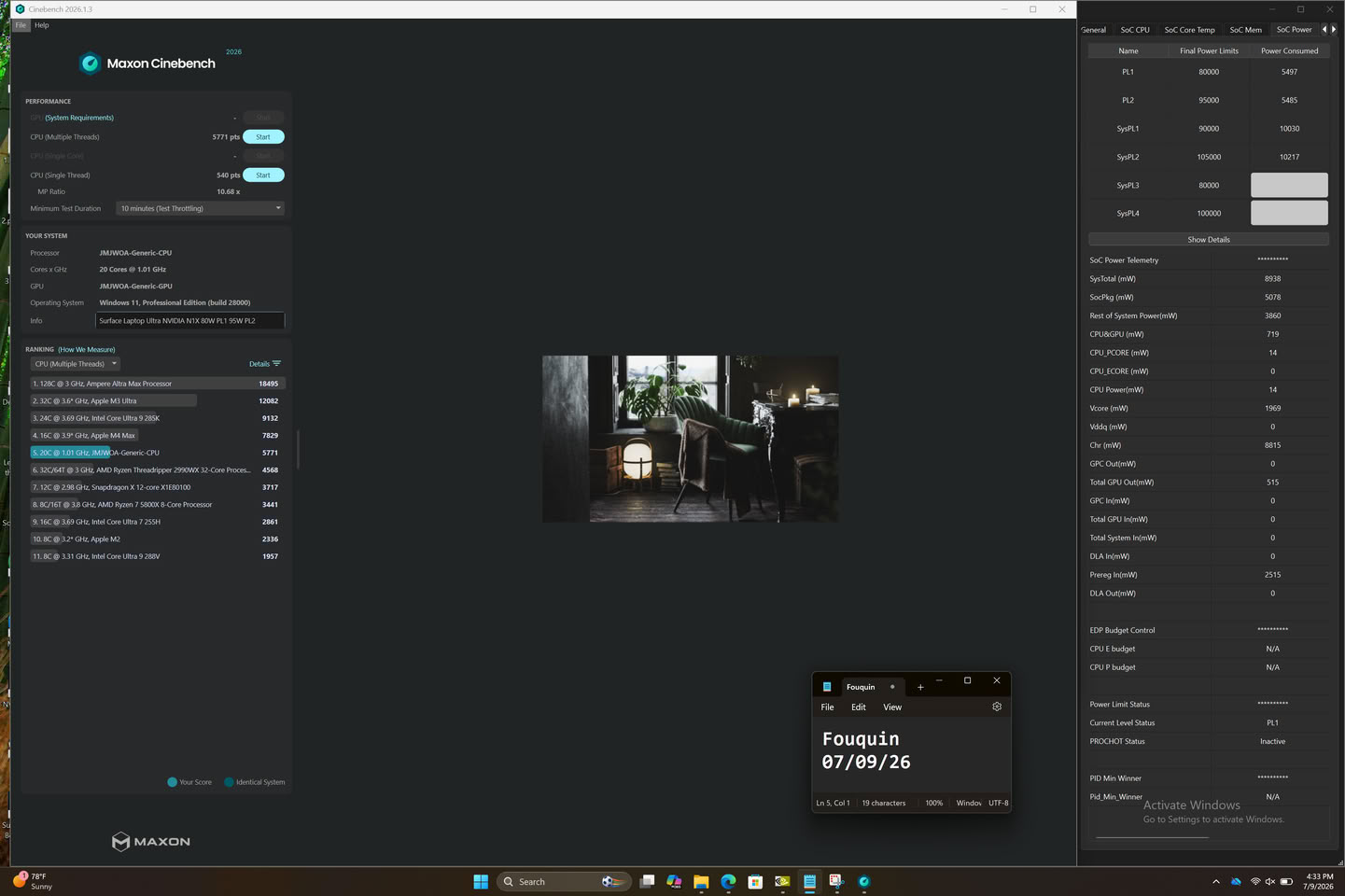
In Cinebench 2024, the RTX Spark CPU achieved 1,386 points (multicore) and 123 points (single-core). In Cinebench 2026, scores reached 5,771 (multicore) and 540 (single-core). These tests were conducted with an 80 W PL1 power limit, suggesting the laptop was set to Performance mode.
Importantly, GPU performance remained consistent whether the device was running on battery or plugged in—an essential feature for modern Arm-based laptops, especially as Apple has set a high standard in this area.
Thermal Management and Fan Behavior
Thermal performance was a key focus in the review. In “Balanced” and “Best Power Efficiency” modes, CPU cores could reach up to 38 W until temperatures hit 98-100°C, at which point the fans would ramp up. The fans are not user-adjustable and typically activate after brief throttling. Under these conditions, the CPU maintained 35-37 W at around 2.6 GHz.
In “Best Performance” mode, the CPU could draw 44-50 W and run at approximately 2.8 GHz when reaching 100°C. The Blackwell GPU operated at cooler temperatures, peaking at 90°C during load spikes and maintaining clock speeds between 2-2.2 GHz in the 80-88°C range. With Max-Q enabled, the GPU is power-throttled before thermal limits are reached, resulting in a typical operating range of 1,550-1,950 MHz at a nominal 50 W TGP.
The overall power envelope for the SoC tops out at 105 W, with PL2 maxing at 95 W and typical “Balanced” scenarios allowing 75-80 W.
Build Quality and User Experience
The Surface Laptop Ultra impressed with its solid build quality and thoughtful design. The keyboard offers satisfying feedback with minimal wobble, enhancing the typing experience. Convenience features include an adaptive backlit keyboard that dims when the user steps away and automatically wakes up using the integrated camera upon return.
Conclusion
While the Microsoft Surface Laptop Ultra with NVIDIA RTX Spark SoC is still in its pre-release phase, early testing highlights both its potential and areas for improvement. With further software optimization and driver updates, this Windows-on-Arm laptop could become a strong contender in the premium ultrabook market, especially for users seeking consistent GPU performance and advanced power management.