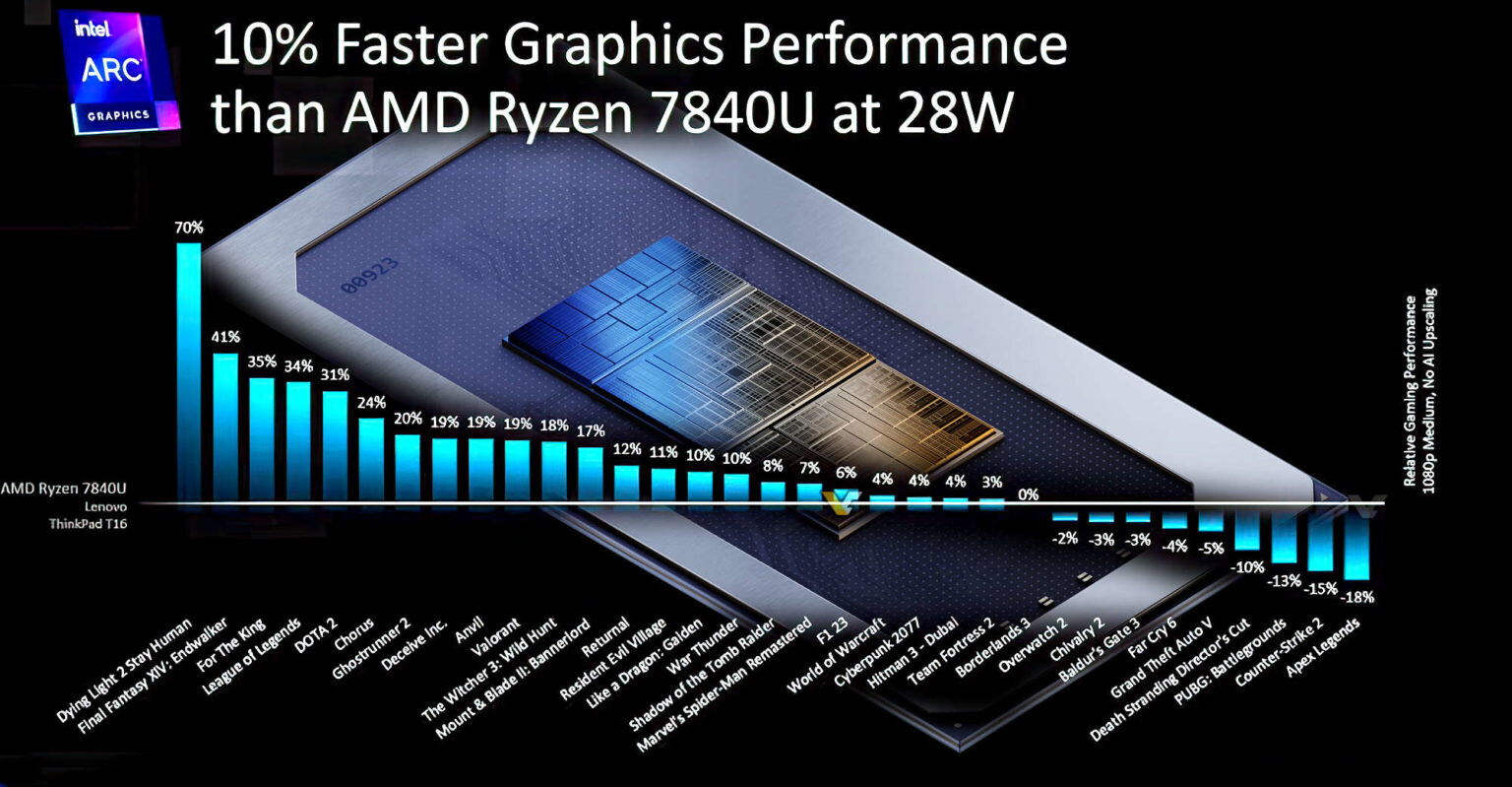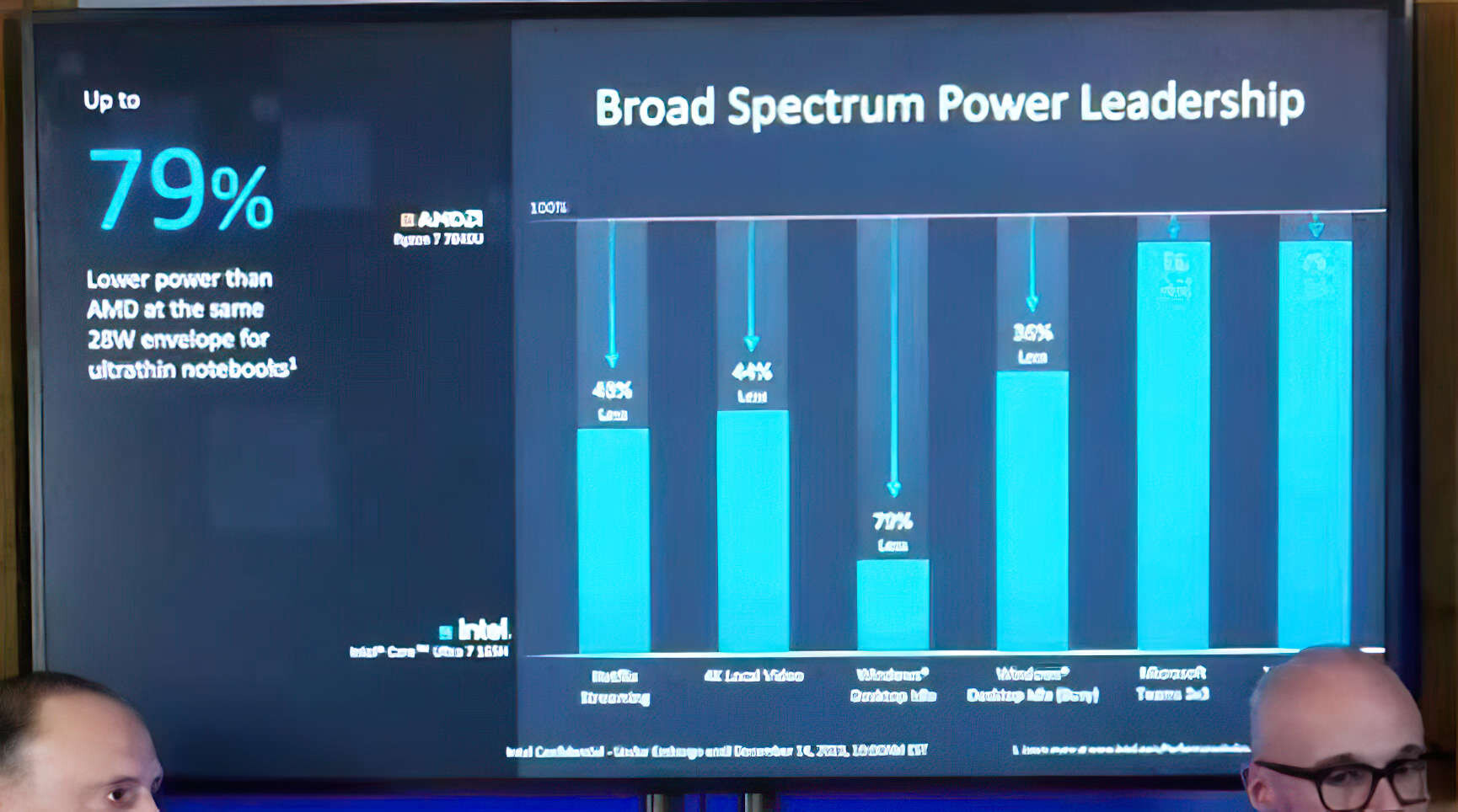
Intel held a pre-launch round-table with HotHardware, where it provided performance details about its upcoming Core "Meteor Lake" mobile processor. The company compared it to the current U-segment chips based on the 13th Gen Core "Raptor Lake" and the AMD Ryzen 7040 "Phoenix." Intel claims that its next-generation iGPU, based on the Xe-LPG graphics architecture with 128 EU, outperforms the Radeon 780M RDNA3 iGPU of the Ryzen 7040, and its CPU performs better in multi-threaded tasks.
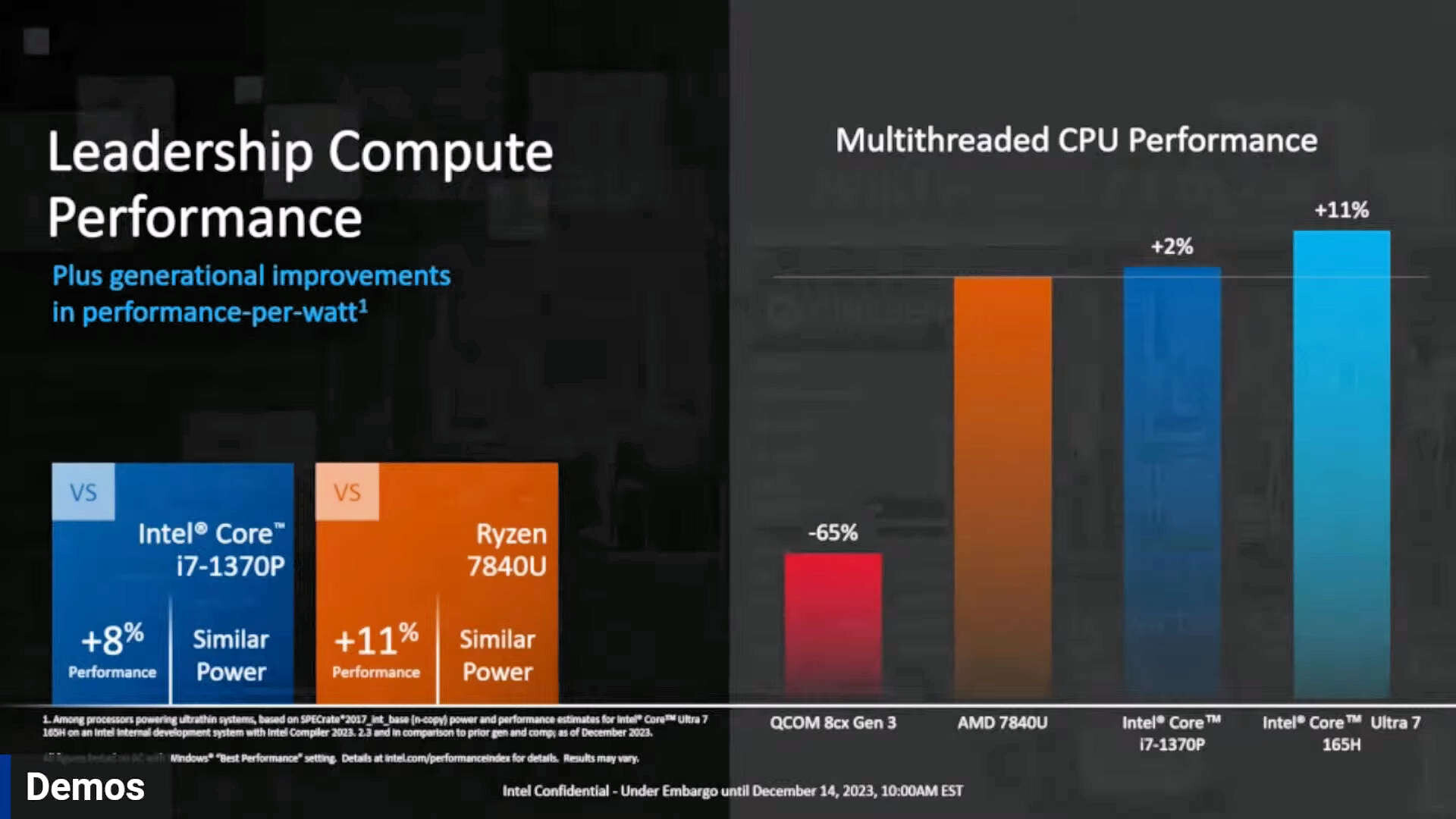
In the comparison, Intel used the Core Ultra 7 165H, a middle-of-the-market performance segment part in the 28 W class. It was compared to the Core i7-1370P "Raptor Lake" and the AMD Ryzen 7 7840U. Intel also included the fastest Windows-ready Arm chip in the market, the Qualcomm 8cx Gen 3. In the 33 games tested, the Intel iGPU showed performance leads ranging from 3% to 70% over the Radeon 780M in 23 out of 33 games. In one game, the two performed equally. In 9 out of 33 games, the Radeon 780M outperformed the Intel Xe-LPG by 2% to 18%. The iGPU of the 165H has 8 Xe cores or 128 EU, while the Radeon 780M has 12 RDNA3 compute units.
The Core Ultra 7 165H is a 16-core/22-thread processor with 6 P-cores, 8 E-cores, and 2 L-cores. Intel also provided multi-threaded CPU performance benchmarks, comparing the chip to an i7-1370P and the 7840U. According to Intel, the 165H is on average 11% faster than the 7840U and 9% faster than the i7-1370P, which is claimed to be 2% faster than the 7840U. All three chips are in a similar power class, targeting thin-and-light notebooks.
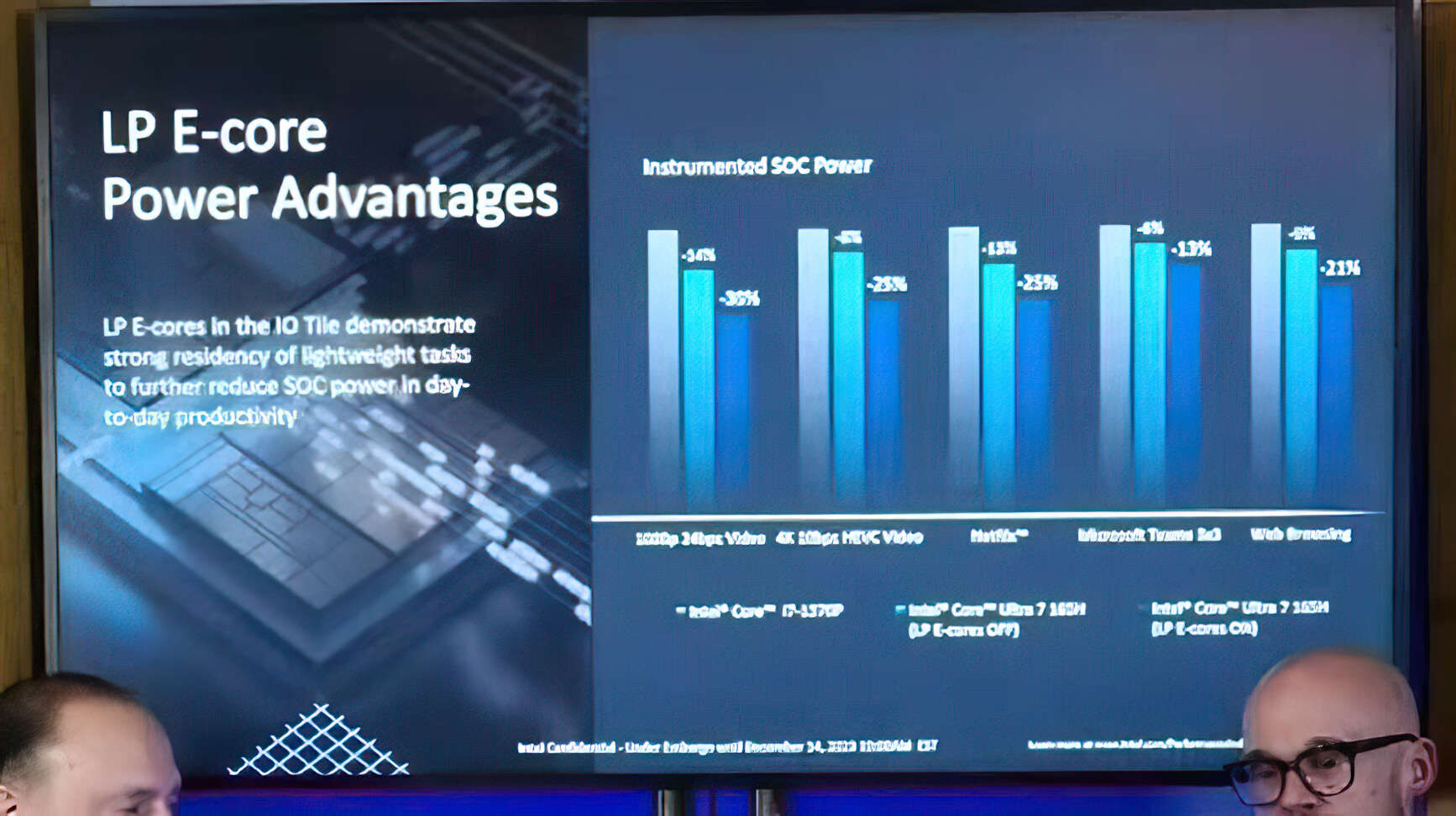
Intel also demonstrated the power management benefits of the 2 low-power island cores in the SoC tile of the "Meteor Lake." The processor's hardware scheduler directs processing load to these cores first and upgrades them to the E-cores and then the P-cores based on performance demand. When idling or with low performance demand, background tasks are relegated to the LP island cores, allowing the processor to save power. This results in power savings ranging from 8% to 35%. Intel considers tasks such as video playback on online streaming services or web browsing as workloads that can be assigned to the LP island cores for power savings.